- Never fire the heater before the pool circulation is running properly.
- Winter is hard on the things around the heater more than the heater itself.
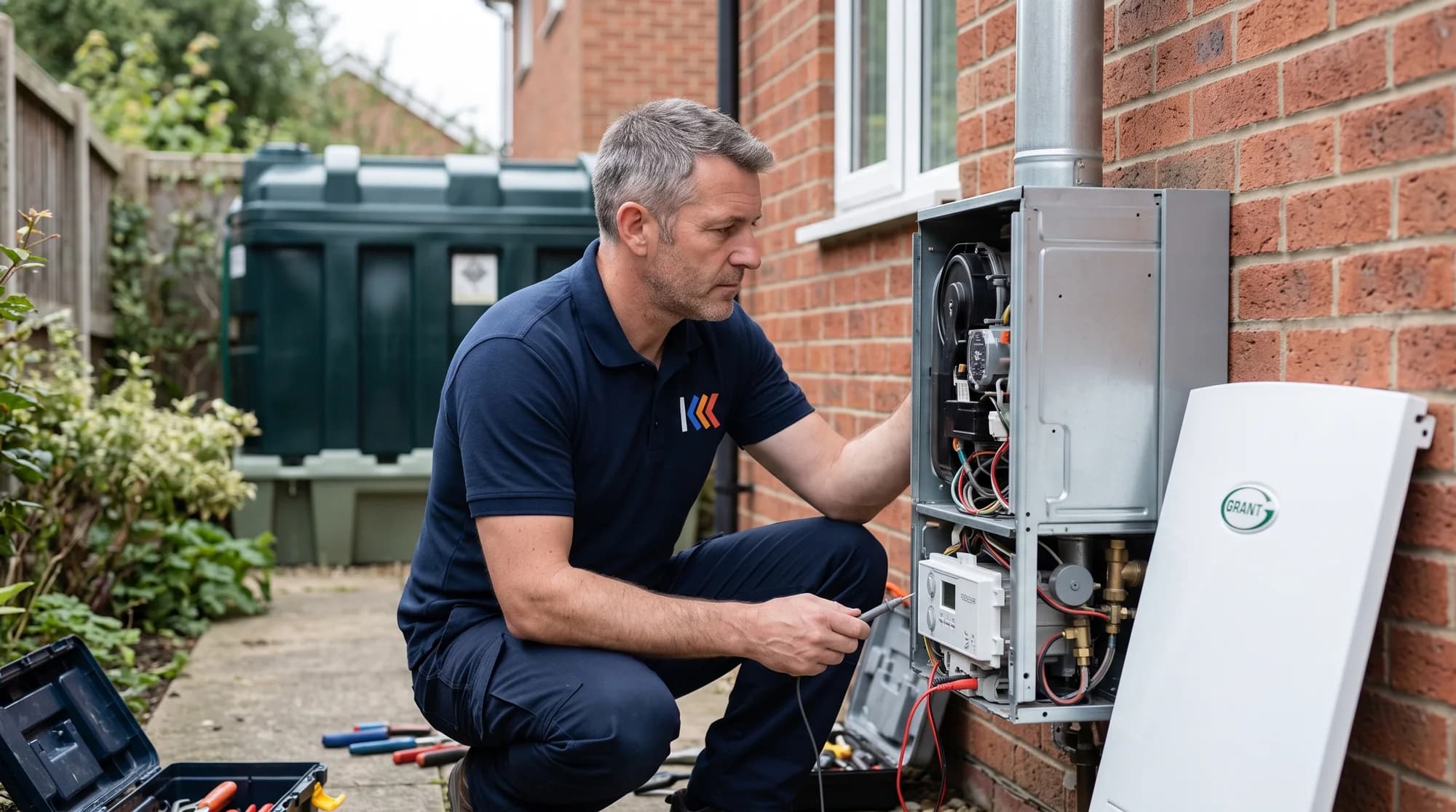
- Oil that has sat all winter can carry water and sediment into the supply line.
- A heater short-cycling in spring usually points at flow, not at the burner.
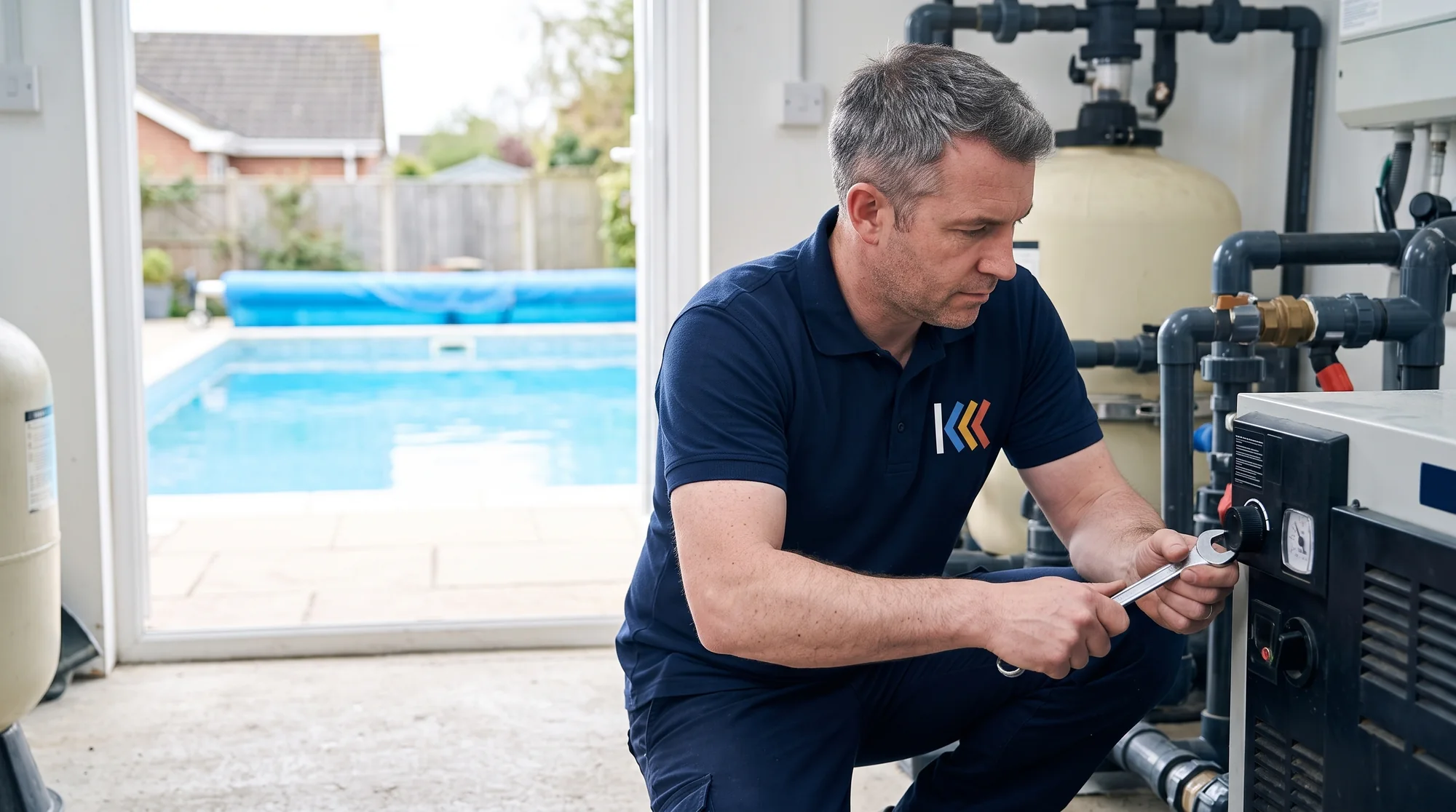
A pool heater has an unusual working life. It runs hard for a few months, then sits unused through the coldest and wettest part of the year, usually in an outbuilding that is not heated and not always dry. Then it is expected to start on demand in April.
Most spring pool heater problems are not really heater problems. They are the consequence of six months of standing still, and they show up in a predictable order.
Circulation before combustion
The single most important rule when recommissioning is that water has to be moving through the heat exchanger before the burner is allowed to fire. Firing into static water is how heat exchangers get damaged.
That means the pump, the filter and the valve positions all get checked and proven first. If the pool has been drained down or partially drained, it needs to be back to its proper level and circulating before anything is lit.
What the winter tends to do
The heater body is usually the most robust thing in the plant room. It is everything around it that suffers.
- Seals and gaskets dry out and shrink, then weep when pressure returns
- Condensation inside the casing corrodes electrical connections and sensors
- Rodents get into plant rooms over winter and cause more cable damage than people expect
- Filter media compacts, and a fouled filter starves the heater of flow
- Water and sediment settle out in the oil tank and can be drawn into the supply line
The oil side needs its own attention
An oil-fired pool heater draws from a tank in the same way a house boiler does, and the same problems apply. Water accumulates in the bottom of a tank through condensation over a cold winter, and sediment settles with it.
When the heater is fired for the first time in spring, that is what gets pulled through the filter. Changing the oil filter as part of recommissioning is cheap and avoids a nozzle fouling in the first week of use.
When it fires but keeps stopping
A heater that lights and then cuts out repeatedly in spring is usually being shut down by its own protection rather than failing to burn. The most common reason is inadequate flow — a partly closed valve, a fouled filter, an air lock or a tired pump.
It is worth resisting the urge to treat this as a burner fault. Repeatedly resetting a heater that is protecting itself is a good way to turn a cheap problem into an expensive one.
A sensible spring sequence
If you want the short version, this is the order the work should happen in.
- Bring the pool back to its normal level
- Backwash or replace filter media and confirm the pump is circulating properly
- Inspect the plant room for water ingress, rodent damage and corrosion
- Check the oil tank for water, and change the oil filter
- Only then commission the heater and check combustion
- Verify the safety cut-outs actually work rather than assuming they do
General guidance based on work we do regularly. Every property is different — if something here sounds like your situation, it is worth having it looked at rather than diagnosed from a page.