Roofing & Guttering
Keeping water off the building and heat inside it. Roofing, guttering and loft work handled by the same team that looks after what is underneath.
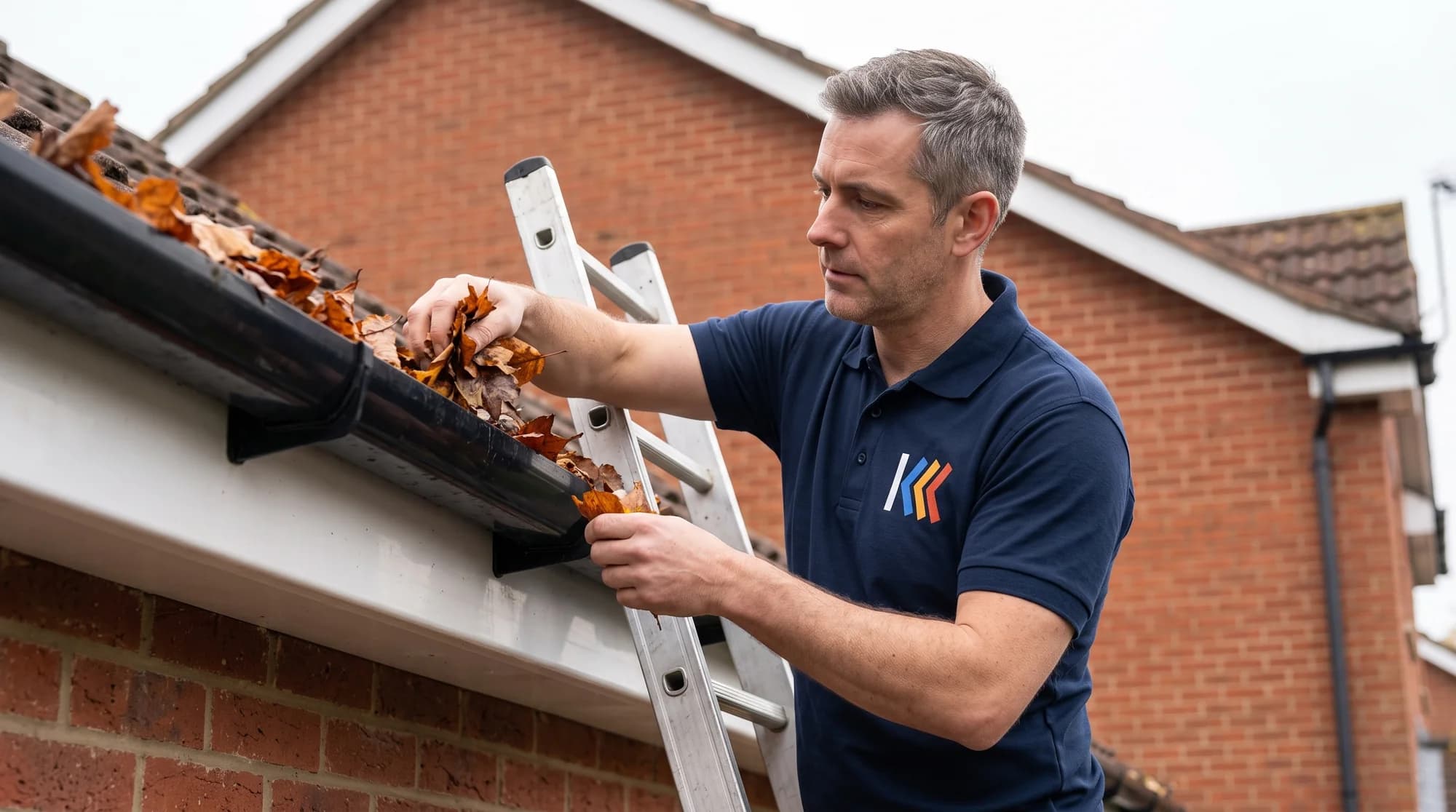
A surprising share of the damp we are called out to look at inside a house starts outside it. Blocked or split guttering puts water down a wall rather than into a drain, and it will keep doing so until the plaster is ruined.
Because we already work inside the building fabric, roofing and guttering sit naturally alongside the rest. The same visit can deal with the leak and the ceiling it damaged, rather than one trade waiting on another.
Signs worth acting on
Water overflowing a gutter
Almost always a blockage or a fall that has shifted. Cheap to correct now, expensive once it has soaked a wall through a winter.
A stain on an upstairs ceiling
Worth tracing rather than repainting. The entry point is often some distance from where the stain appears.
Flat roof holding water
Standing water after rain suggests the falls or the deck have moved. Left alone it shortens the life of the covering considerably.
Cold rooms upstairs
Often thin or displaced loft insulation. It is one of the least glamorous improvements and one of the most cost-effective.
How the job runs
Look at the outside
We establish where water is actually getting in, which is rarely where the damage shows.
Report honestly
If a repair will hold, we will say so. If the covering is at the end of its life, we will say that instead.
Quote the work
A clear price for the repair, with access arrangements set out up front.
Fix inside and out
Where the leak has damaged something internally, we can put both right on the same job.
Roofing & Guttering across the region
Berkshire, Hampshire, Oxfordshire and Surrey, plus the London Borough of Richmond upon Thames and Bournemouth. Not sure if you are in range? Call and ask — it is usually a yes.
Common questions
Yes. Clearing, realigning and replacing guttering and fascias are all part of the work, and clearing is often all that is needed to stop water tracking down a wall.
It depends on the state of the deck underneath. A sound deck with a failed covering is usually worth recovering; a deck that has taken water for years generally is not. We will tell you which you have.
If yours is thin, compressed or has been pushed aside for storage, topping it up is one of the cheaper things you can do to reduce heat loss. It also pairs sensibly with boarding, provided the boarding does not crush the insulation underneath.
Because water getting into a building rarely respects trade boundaries. A leak that comes through a roof frequently damages ceilings, and sometimes wiring, and it is quicker to have one team deal with the cause and the consequence together.
Related services
All services →Water getting in?
Describe the problem and we will tell you straight — then quote for it.