- Unvented cylinders hold hot water at mains pressure, not gravity pressure.
- They rely on layered safety devices — expansion vessel, pressure relief, thermal cut-out.
- Installing or servicing one requires a G3 qualified operative. It is a competence requirement, not a formality.
- Water discharging from an outside pipe means a safety device has operated and should be investigated.
If your hot water comes out of the tap at roughly the same pressure as the cold, you probably have an unvented cylinder. If the hot is noticeably weaker upstairs and there is a small tank in the loft, you have a vented system.
The difference matters more than it sounds, because an unvented cylinder is a pressure vessel. It stores a substantial volume of hot water at incoming mains pressure, and it depends entirely on its safety devices being correctly specified, correctly installed and periodically checked.
What G3 actually refers to
G3 is the part of the Building Regulations covering unvented hot water storage. Work on these systems has to be carried out by someone holding the relevant competence qualification — that is what people mean when they say an engineer is "G3 qualified".
It is not an optional trade badge like a membership scheme. It exists because the failure mode of an unvented cylinder is genuinely serious, and because the protective devices that prevent it are not obvious to someone who has only worked on vented systems.
The safety devices, and why there are several
Water expands when heated. In a vented system that expansion simply pushes back up into the tank in the loft. In an unvented system there is nowhere for it to go, so the expansion has to be absorbed and the pressure has to be limited. That job is done by a layered set of devices, each covering the failure of the one before it.
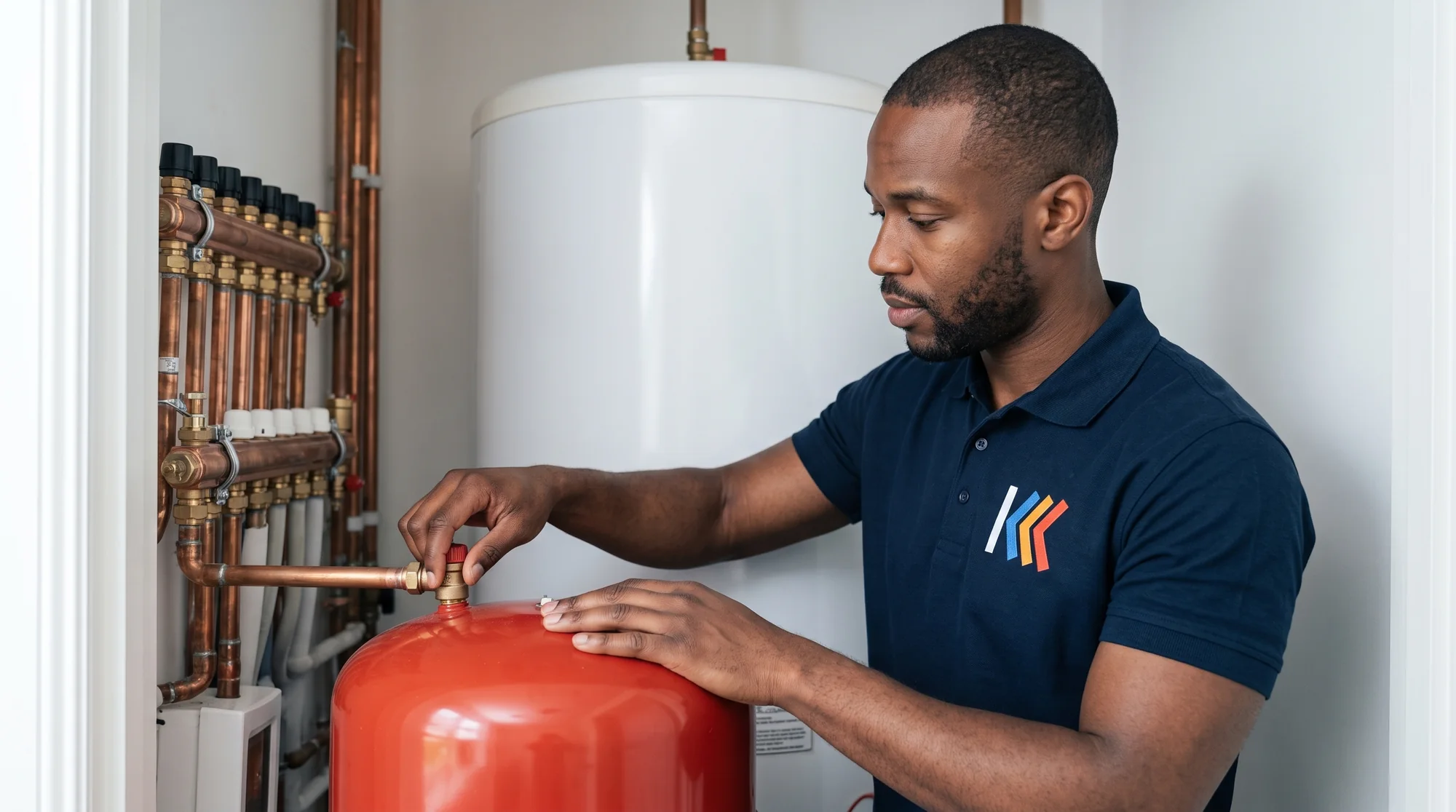
- An expansion vessel takes up the increase in volume as the water heats
- A pressure reducing valve keeps incoming mains pressure within the cylinder rating
- An expansion relief valve opens if pressure still rises too far
- A thermal cut-out shuts off the heat source if the thermostat fails
- A temperature and pressure relief valve is the last line if everything else has failed
What the outside pipe is telling you
Unvented cylinders discharge through a pipe that terminates somewhere visible — usually outside, often near ground level. This is deliberate. It is designed so that if a safety device operates, somebody notices.
So if you find water running or dripping from a small pipe outside, that is not a plumbing nuisance. It is the system reporting that one of the protective devices has done its job. The two most common causes are a failed expansion vessel, which can no longer absorb expansion, and a control fault letting the water get too hot.
Neither is a disaster if it is dealt with. Both are worth dealing with rather than ignoring, because a system that has exhausted one layer of protection is running on the next one down.
Servicing is not optional either
The expansion vessel is the part that most commonly needs attention. It contains a charge of air separated from the water by a membrane, and over time that charge can be lost. When it is, the cylinder loses its ability to absorb expansion and starts relieving pressure through the relief valve instead.
Checking and recharging it is routine work — but it is work that has to be done by someone qualified to do it, and it is the sort of thing an annual service is for.
Signs your cylinder needs looking at
Most unvented problems announce themselves before they become urgent, provided somebody is paying attention.
- Water discharging from the outside pipe, even intermittently
- Hot water that runs out much faster than it used to
- Banging, knocking or rumbling from the cylinder
- Hot water that is noticeably hotter than it used to be
- Any visible corrosion, weeping or staining around the fittings
General guidance based on work we do regularly. Every property is different — if something here sounds like your situation, it is worth having it looked at rather than diagnosed from a page.